
Most security incidents in offices begin with someone who should not have been inside. Good access control lets employees in quickly, welcomes visitors professionally and quietly keeps everyone else out. It does not need to feel like an airport. This article explains the building blocks and how to combine them for a corporate office in Egypt.
Define zones before buying technology
Start by dividing the building into zones according to who needs access and how sensitive each area is. A typical office has a public area (lobby and reception), a general staff area, restricted areas such as finance, HR and executive floors, and high-security rooms such as servers, records and cash. Each zone needs its own rules.
| Zone | Who has access | Typical control |
|---|---|---|
| Public | Everyone during opening hours | Reception and security officer |
| Staff areas | Employees and escorted visitors | Access card at turnstile or door |
| Restricted | Named staff only | Card plus access group, logged entries |
| High security | Very few named staff | Card plus PIN or biometric, CCTV, audit |
Access cards and credentials
Cards should be issued only by an authorised person, linked to a named individual and cancelled immediately when someone leaves or loses a card. Avoid shared or generic cards. Review access rights at least every quarter: people change roles, and their access often stays behind.
Turnstiles and tailgating
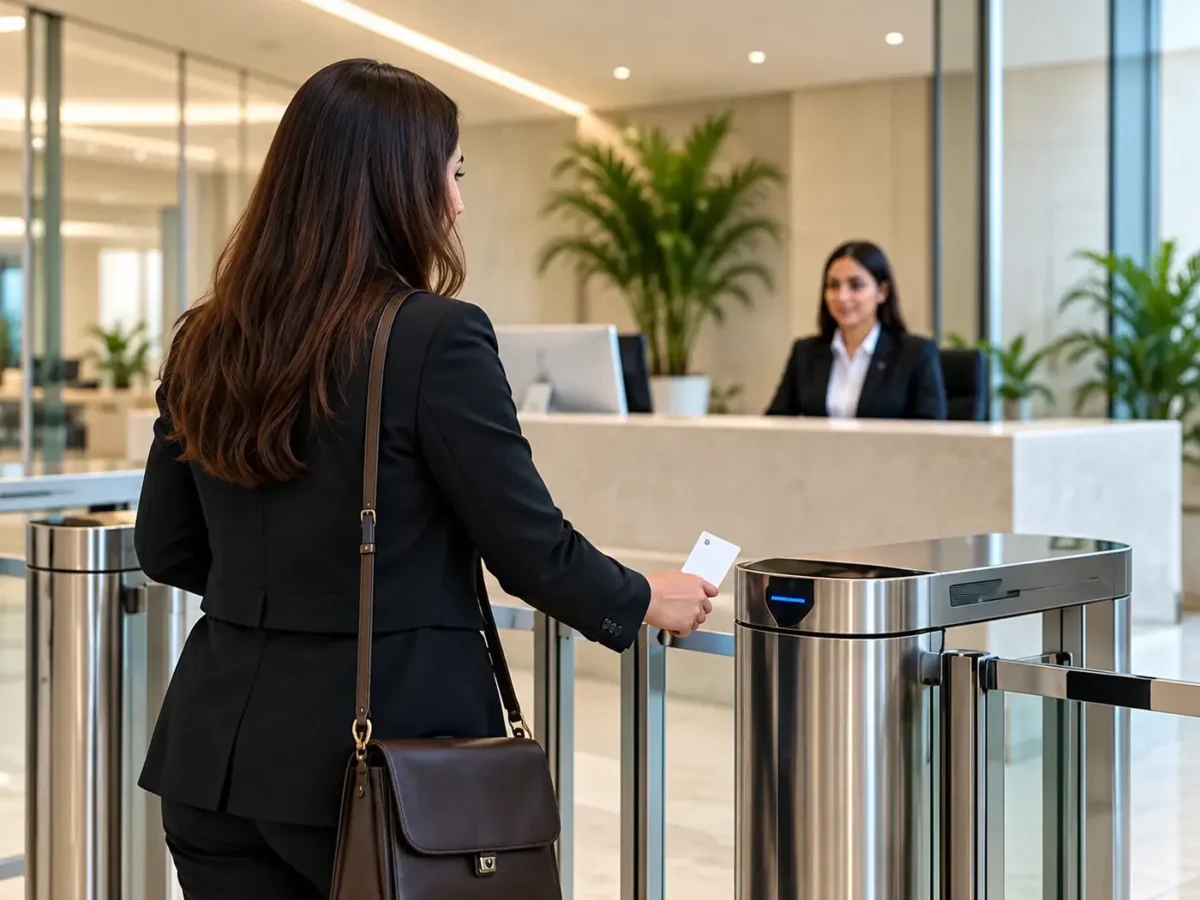
Tailgating, when one person follows another through a door, is the most common way to defeat access control. Speed gates or turnstiles at the lobby, combined with an attentive officer and a culture where staff do not hold secure doors for strangers, make the biggest difference.
Visitor management that feels welcoming
- Pre-registration by the host, so visitors are expected
- Identity check and registration at reception
- A visible visitor badge with name, host and date
- Visitors escorted in staff areas
- Badges returned and visits closed on departure
- Visitor data handled in line with data protection law
A digital visitor system speeds up reception, notifies hosts and produces an accurate list of who is in the building, which is vital during an evacuation.
Contractors and deliveries
Cleaning, maintenance and IT contractors often have wide access and work outside normal hours. Give them time-limited credentials, require a sign-in and sign-out, and supervise work in sensitive areas. Deliveries should be received at a defined point and not carried into offices by couriers.
The role of the security officer
Technology records and restricts; people judge. A well-trained reception security officer greets visitors, notices unusual behaviour, handles exceptions politely and knows when to escalate. Their professionalism is the first impression your company makes.
Checklist
- Zones defined and approved by management
- Card issue and cancellation procedure in place
- Quarterly review of access rights
- Anti-tailgating measures at main entrances
- Visitor pre-registration and badges
- Contractor and delivery procedures
- Reception officers trained in customer service and security
Magnum provides reception and access control officers and designs integrated access control and visitor systems. See our guarding services or talk to us.
Frequently asked questions
What is tailgating in access control?
Tailgating is when an unauthorised person follows an authorised one through a secured door or turnstile. Speed gates, attentive officers and staff awareness are the most effective countermeasures.
How often should access rights be reviewed?
At least every quarter, and immediately when employees change roles or leave the company.
Do visitor management systems need to follow data protection rules?
Yes. Visitor information is personal data and should be collected, stored and deleted in line with applicable law, including Egypt’s Personal Data Protection Law.