When people picture executive protection, they often imagine a large man in sunglasses standing beside a car. In practice, the work that keeps a senior executive safe happens long before the car door opens: understanding the risks, planning every movement and making sure that nothing about the visit is left to chance. This article explains what a professional close protection team in Egypt actually does, and how to tell good service from expensive theatre.
It starts with a threat and risk assessment
Every protective assignment should begin with a written assessment of the person, the purpose of the visit and the environment. Who is travelling? Is their profile public? Are there business disputes, media interest or activist attention? Where will they stay, meet and travel, and at what times? The answers determine the size of the team, the vehicles, the routes and the level of visibility.
A low-profile visit for a regional manager might need one experienced protection officer and a trained security driver. A high-profile chief executive attending public events may need a larger team, advance work at every venue and close coordination with hotel and venue security. Matching the protection to the real risk is the first sign of a professional provider.
Advance work: the part clients rarely see
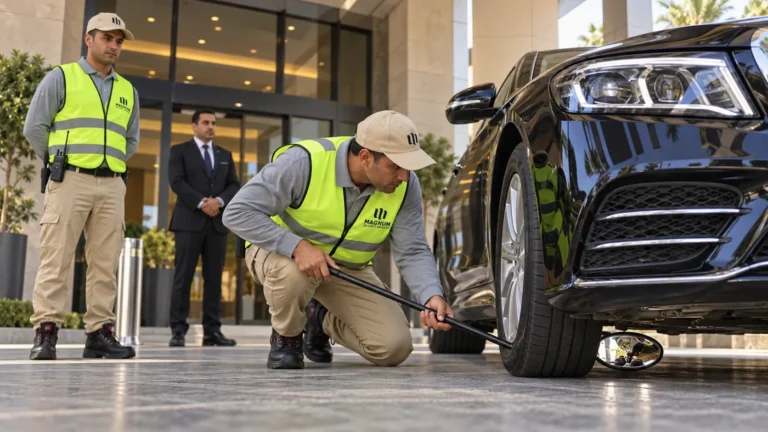
Before the principal arrives, the team visits hotels, offices and venues. They confirm entrances and exits, parking and drop-off points, the location of medical facilities, safe rooms and alternative routes. They meet hotel and venue security, agree how the principal will move through the building and identify points where crowds or delays could form.
- Primary and alternative routes between each location, checked at the times they will be used
- Drop-off and pick-up points that avoid unnecessary exposure on the street
- Nearest hospitals with emergency departments and how to reach them quickly
- Contacts at hotels, venues and the client’s local office
- Communication plan, including what happens if phones fail
Secure movements and the role of the driver
Most of the risk during a business visit to Cairo is on the road: traffic, accidents and unplanned stops. A trained security driver is therefore as important as the protection officer. Good drivers plan routes, keep the vehicle ready, avoid predictable patterns and know how to react calmly if something goes wrong. The protection officer and the driver work as one unit, with clear roles at every stop.
Vehicles should be well maintained, appropriate to the profile of the visit and inconspicuous where discretion matters. For many corporate visitors, a professionally driven executive vehicle with a security-trained driver provides the right balance of comfort and protection.
Discretion is a professional skill
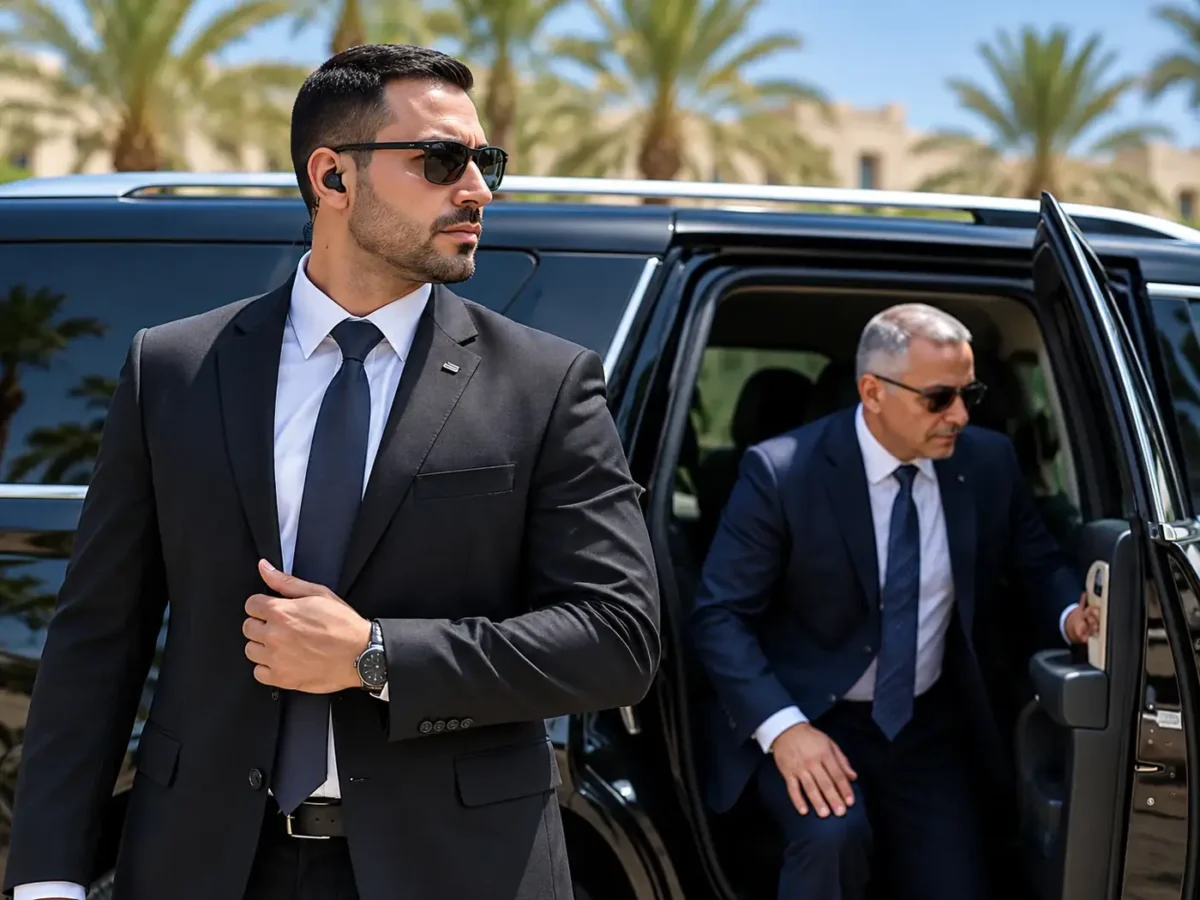
Effective protection rarely draws attention. Officers dress to blend into the environment, stay close without crowding the principal and step forward only when needed. They respect the principal’s privacy, the confidentiality of meetings and the people around them. A team that intimidates hotel staff or members of the public creates risk rather than reducing it.
What a client should expect to receive
| Deliverable | Why it matters |
|---|---|
| Written risk assessment | Explains the level of protection proposed and why |
| Itinerary and movement plan | Shows routes, timings, vehicles and contingencies |
| Named team leader | One accountable person, reachable throughout the visit |
| Medical and emergency plan | Knows exactly where to go and who to call |
| Post-visit report | Records incidents, near misses and lessons for next time |
Questions to ask a provider
- Who will lead the detail, and what is their experience?
- How do you assess risk, and will I see the assessment?
- Are your drivers trained in defensive and evasive driving?
- How do you coordinate with hotels, venues and our local office?
- What is your plan for a medical emergency?
- How do your officers respect privacy and human rights?
Protection arrangements must always comply with Egyptian law. A reputable provider will explain clearly what its officers can and cannot do.
Magnum provides executive protection, secure transportation and secure airport arrivals for business visitors and resident executives. Talk to us about your next visit.
Frequently asked questions
How many protection officers does an executive need in Egypt?
It depends on the person’s profile and the itinerary. Many business visits need one experienced officer and a security driver; higher-profile visits or public events may need a larger team and advance work.
Is a security driver necessary for business visits to Cairo?
For senior visitors it is strongly recommended. Road travel is where most disruption occurs, and a trained driver plans routes, avoids predictable patterns and reacts calmly to incidents.
Should close protection be visible?
Usually not. Professional protection is discreet and adapted to the environment; visibility is increased only when the risk assessment calls for it.