Warehouses and distribution centres hold large amounts of valuable, easily resold goods, with many people, vehicles and contractors moving through them every day. Losses are rarely dramatic. More often they are small, repeated and hidden in paperwork until a stock count reveals the gap. The good news is that most of these losses can be prevented with disciplined processes, well-supervised officers and the right technology.
Where losses usually happen
- At the gate: vehicles leaving with more than the paperwork shows
- At the loading bay: miscounts, swapped pallets and goods hidden in returns
- In storage: high-value items in open racking with no restricted zone
- Through people: collusion between drivers, staff or contractors
- In transit: tampered seals and unauthorised stops
Control the gate
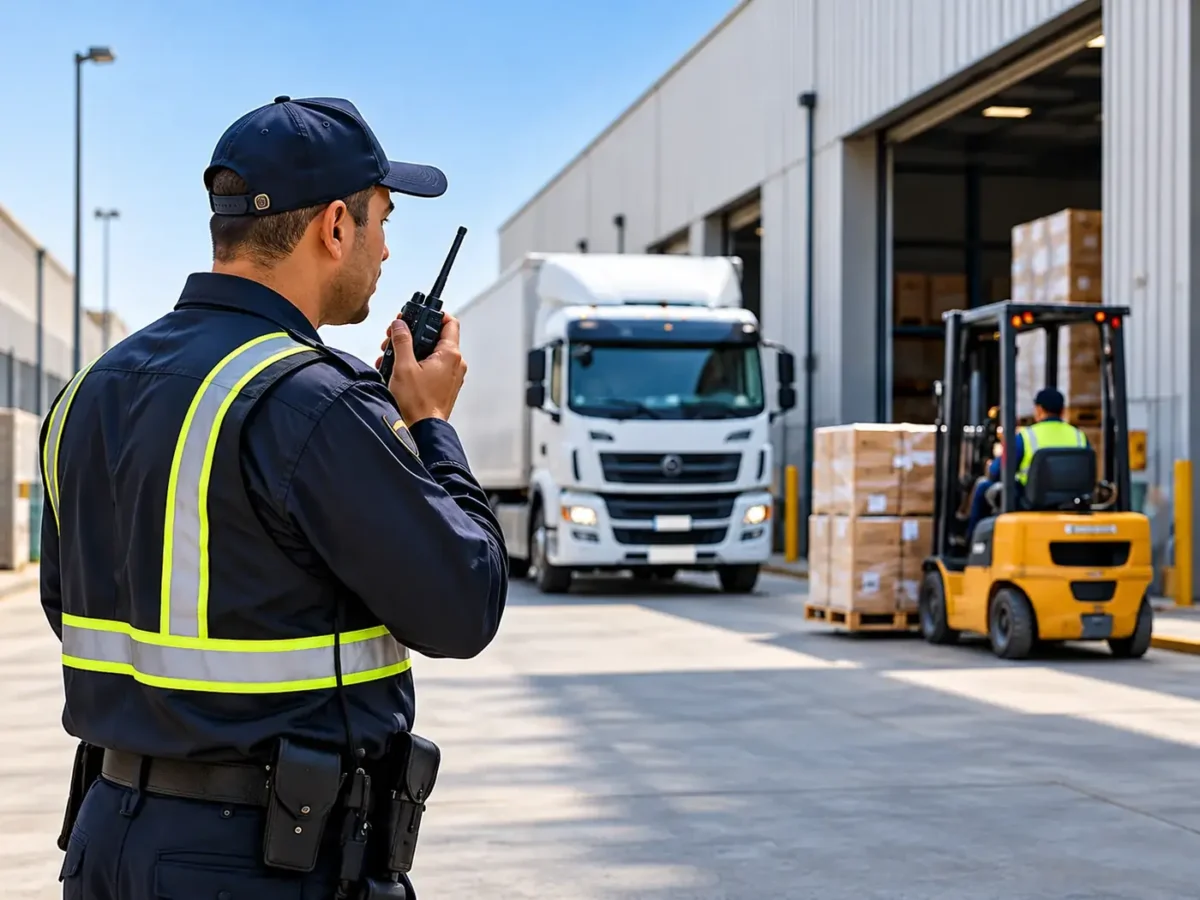
The gate is the last chance to stop goods leaving without authority. Security officers should check every vehicle against a gate pass or delivery note, verify seal numbers, record times and registration numbers, and inspect cabs and empty trailers. Checks must be consistent: if senior managers or familiar drivers are waved through, everyone learns that rules are optional.
| Check | What the officer verifies |
|---|---|
| Documents | Gate pass or delivery note matches the vehicle, driver and load |
| Seals | Seal numbers match the documents and are intact |
| Vehicle | Cab, under-seat storage and empty trailers are clear |
| People | Driver and helpers are registered and authorised |
| Records | Times, plate numbers and checks are logged |
Organise the loading bay
Separate inbound and outbound areas, keep bay doors closed when not in use and do not allow drivers to wander into storage areas. Count goods at handover with both parties present and sign for discrepancies immediately. CCTV over each bay, recorded and retained for an agreed period, helps resolve disputes quickly.
Protect high-value stock
Keep the most attractive items in a caged or locked zone with restricted access, separate counting and frequent cycle counts. Access to that zone should be logged, either electronically or in a register checked by a supervisor.
Patrols and night security
Outside working hours, the risk shifts to intrusion. Patrol officers should check perimeters, doors, roller shutters and fire exits on a varied schedule. Electronic patrol checkpoints show that rounds were actually completed, and an operations room can follow up immediately if a patrol is missed.
Do not ignore insider risk
Many losses involve someone on the inside. Fair recruitment checks, clear rules, rotation of sensitive duties, a confidential way to report concerns and visible consequences for misconduct all reduce temptation. Treat staff with respect: the aim is to make wrongdoing difficult, not to make honest people feel suspected.
Investigate losses properly
When a loss is found, preserve records and footage, establish the timeline and involve management and, where appropriate, the authorities. Every investigation should end with a lesson: which control failed and what will change.
Quick self-check
- Is every outbound vehicle checked against documents and seals?
- Are inbound and outbound areas separated?
- Is high-value stock in a restricted zone?
- Are patrols verified electronically?
- Is CCTV footage retained long enough to investigate?
- Is there a confidential reporting channel?
Magnum secures factories, warehouses and logistics sites. See our warehousing and logistics security and guarding services, or request a site assessment.
Frequently asked questions
How can I reduce theft in my warehouse?
Control the gate with consistent document and seal checks, separate loading areas, restrict high-value stock, verify patrols electronically and address insider risk with fair rules and confidential reporting.
Should security officers search vehicles leaving a warehouse?
Officers should check vehicles against documents and seals and inspect cabs and empty trailers according to an agreed procedure that respects the law and people’s dignity.
How long should warehouse CCTV footage be kept?
Long enough to investigate discrepancies found at stock counts, typically several weeks. Agree a retention period with management and comply with data protection law.